
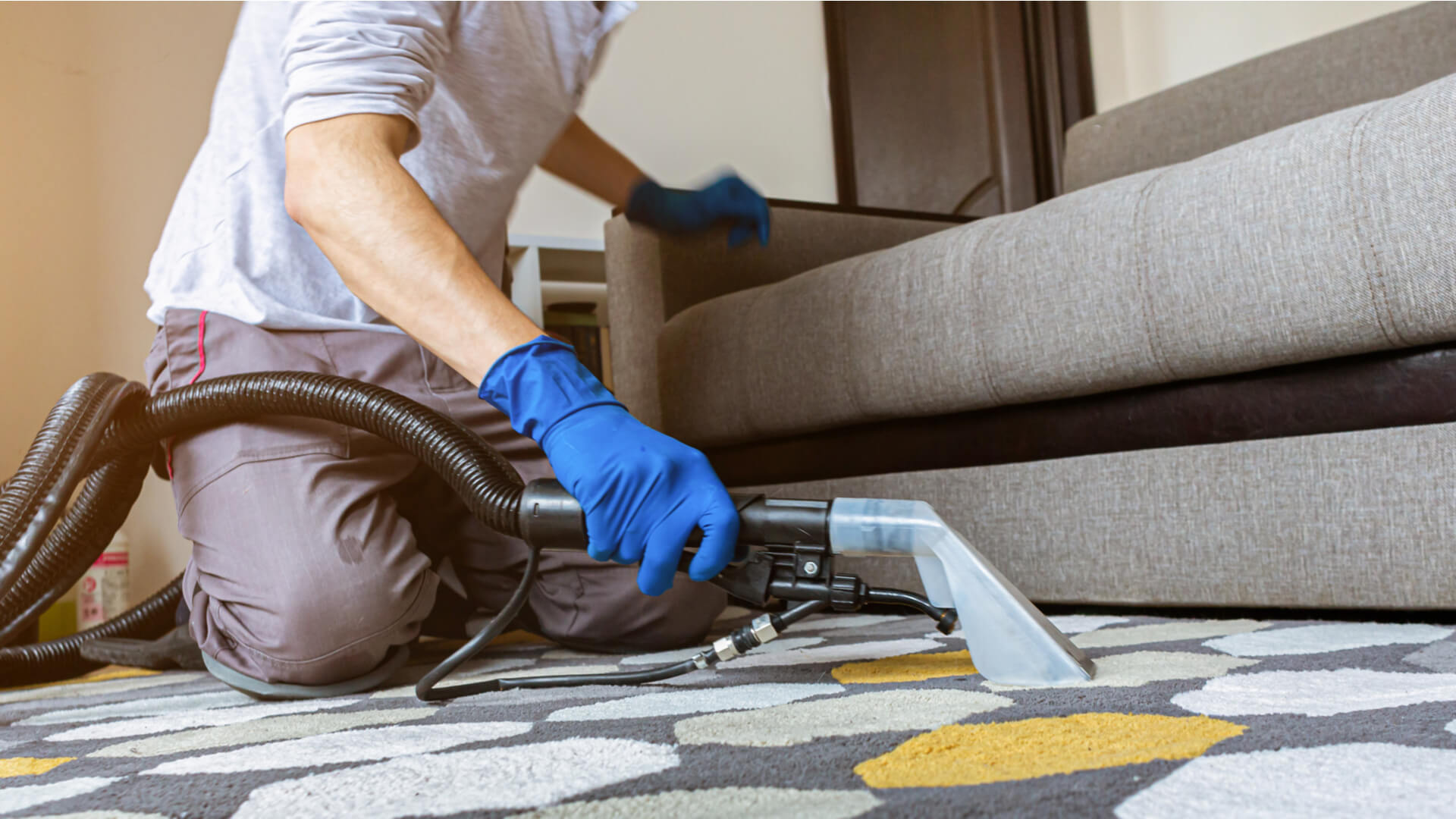
We’ve all been there. You’re staring at a fresh stain on the carpet, and the clock is ticking. The little voice in your head says “just grab that spray from under the sink.” And honestly, it’s hard to argue with convenience. Those bottles promise the world—instant results, no scrubbing, a miracle in thirty seconds flat. But after years of pulling up carpets and rugs that have been slowly destroyed by these so-called magic potions, we can tell you: the real miracle is that more people don’t read the fine print on their warranty first.
Key Takeaways:
- Most off-the-shelf “miracle” cleaners leave behind residues that void your carpet or rug warranty.
- Harsh chemicals in DIY products can permanently damage delicate fibers like wool, silk, and viscose.
- Professional cleaning is often required by manufacturers to keep your warranty valid.
- The upfront cost of a DIY cleaner is tiny compared to the cost of replacing a ruined rug or losing warranty coverage.
- If you’ve already used a store-bought cleaner and noticed discoloration or stiff fibers, call a pro immediately—time is not on your side.
The Problem with Promises
Walk down any cleaning aisle, and you’ll see the same thing: bottles screaming about “oxygen power” and “stain erasers.” The marketing is brilliant, we’ll give them that. But what they don’t show you is what happens six months later. We’ve had customers in Wantagh and Bellmore bring us rugs that felt like sandpaper because a “magic” spray crystallized inside the fibers. We’ve seen wool carpets turn brown after a single application of an oxygen-based cleaner that was never meant for natural fibers.
The dirty secret is that these products are designed to work fast on synthetic test swatches in a lab. Real life is different. Real life involves pet urine that soaks into the padding, oily residues that bond with dirt, and fibers that react unpredictably to harsh chemicals. And the worst part? Most manufacturers explicitly state in their warranty documents that using non-approved cleaning products voids all coverage. That $10 bottle just cost you a $3,000 rug.
What Actually Happens to Your Warranty
Let’s be clear about something. Carpet and rug warranties are not generous. They are legal documents written by manufacturers who want to limit their liability. They include specific requirements for cleaning frequency, methods, and approved products. When you use a store-bought “miracle” cleaner, you are almost certainly violating those terms.
We’ve had this conversation more times than we can count. A customer calls us in a panic because their new carpet has a weird discoloration. They pulled out the warranty paperwork, and there it is—a clause saying that only hot water extraction (steam cleaning) by a professional using manufacturer-approved solutions is acceptable. The customer used a foaming spray from the grocery store. The warranty is void. There is no appeal process.
The same applies to area rugs. Hand-knotted wool rugs, silk rugs, even high-end synthetics—they all come with care instructions. And those instructions almost never say “feel free to spray whatever you want on this.” They say “professional cleaning only” or “use only approved products.” Ignoring that is a gamble you will lose.
How Residues Destroy Your Carpet Slowly
Here’s something most people don’t realize. Many DIY cleaners don’t actually remove dirt. They coat the fibers with a sticky or waxy residue that temporarily masks the stain. The dirt is still there, just buried. Over the next few weeks, that residue attracts more dirt, dust, and grime. Your carpet looks dirtier faster. You clean it again with the same product. The residue builds up. Eventually, the fibers become stiff, discolored, and brittle.
We’ve seen this happen with synthetic carpets that should have lasted fifteen years. After three years of regular DIY cleaning, the carpet looked terrible. The manufacturer refused to honor the warranty because the residue had chemically altered the fibers. The homeowner had to replace the entire floor. That “affordable” cleaner ended up costing thousands.
When DIY Actually Makes Sense (And When It Doesn’t)
We’re not here to say you should never clean a spill yourself. That would be unrealistic. If you drop a glass of red wine on a synthetic carpet and you blot it up immediately with a clean cloth and plain water, that’s fine. You’re not going to void your warranty for that. The problem starts when you reach for a chemical spray.
Here’s a quick rule of thumb we use ourselves: If the stain is fresh and small, blot it with cold water. If it’s dry or set in, call a professional. And if the item is a valuable rug—especially wool, silk, or viscose—do not touch it with anything. Just call. The risk of permanent damage is too high.
What About “Green” or “Natural” Cleaners?
This one comes up a lot. Customers tell us they used a vinegar and water solution because it’s “natural.” Here’s the thing: vinegar is acidic. It can damage wool fibers, strip dye, and alter the pH balance of the carpet backing. A proper carpet cleaning approach requires pH-neutral solutions that are safe for the specific fiber type. Natural doesn’t mean safe. It just means natural.
The Real Cost of a “Bargain”
We put together a simple comparison to help people see the full picture. This isn’t theoretical—these are numbers we’ve seen play out in real jobs on Long Island.
| Factor | DIY “Magic” Cleaner | Professional Cleaning |
|---|---|---|
| Upfront cost | $8–$15 per bottle | $150–$400 for a typical home |
| Residue left behind | Almost always | Minimal to none with proper extraction |
| Warranty risk | Very high—most warranties voided | Low—follows manufacturer guidelines |
| Fiber damage risk | High for wool, silk, viscose | Low with fiber-specific methods |
| Long-term carpet life | Often reduced by 30–50% | Extended by proper maintenance |
| Odor removal | Masks temporarily | Removes source with enzymatic treatment |
| Best use case | Very fresh, minor spills on synthetic | Everything else |
The math is pretty straightforward. A $10 bottle that ruins a $2,000 carpet is not a bargain. A $200 professional cleaning that keeps your warranty intact and adds years to your carpet’s life is an investment.
When You Absolutely Need to Call a Professional
We’ve handled enough emergencies to know when DIY is a bad idea. Here are the situations where we’d strongly advise against using any store-bought product:
- Persistent pet urine odors. The smell isn’t on the surface. It’s in the pad, the subfloor, and the fibers. DIY sprays just cover it up. You need enzymatic treatment and deep extraction.
- Delicate rugs. Silk, viscose, antique wool, and Persian rugs require specialized handling. One wrong spray can cause irreversible color loss or fiber damage.
- Water damage. If you’ve had a flood or leak, you need rapid drying and antimicrobial treatment. DIY cleaning will not prevent mold growth.
- Warranty requirements. If your warranty specifies professional cleaning every 12–24 months, skipping it or doing it yourself voids coverage. Period.
- Commercial spaces. High-traffic areas need deep cleaning that removes embedded soil. Surface cleaning just makes things worse.
What We’ve Learned from Real Customers
We’ve been doing this long enough to see patterns. The customers who call us in a panic after using a “magic” cleaner almost always say the same thing: “I didn’t think it would hurt.” And we get it. The packaging doesn’t warn you about voided warranties or fiber damage. It promises a clean carpet in minutes.
But we’ve also seen the other side. Customers who call us for regular maintenance, who follow manufacturer guidelines, who trust professionals to handle the tough jobs—they keep their carpets and rugs for decades. Their warranties are intact. Their floors look good. And they don’t have to deal with the stress of a ruined investment.
One customer in Smithtown had a beautiful wool rug that her grandmother passed down. She used a popular oxygen cleaner on a small stain. Within hours, the fibers turned brown and stiff. We were able to partially restore it, but the damage was permanent. That rug was irreplaceable. The cost of a professional cleaning would have been a fraction of the loss.
The Bottom Line on “Magic” Cleaners
Those bottles are not your friends. They are designed to sell quickly, not to protect your flooring investment. The real magic is in proper maintenance—following your warranty guidelines, using fiber-specific cleaning methods, and calling professionals when the job is beyond a simple blot.
If you’re in Nassau County or anywhere on Long Island, you know the humidity and seasonal changes can be tough on carpets and rugs. Mold, mildew, and dirt buildup are real concerns. Professional cleaning isn’t a luxury. It’s the smartest way to protect your home and your wallet.
So next time you’re tempted by a “miracle in a bottle,” remember: the real miracle is a carpet that lasts, a warranty that holds up, and a professional who knows what they’re doing. We’ve seen both sides of this story, and we know which ending we’d rather have.

